
As the cooler months approach in Western Australia, many Perth homeowners begin to look forward to the cozy warmth of a crackling fireplace. Whether you are in a heritage home in Guildford or a cozy suburban house in Fremantle, your chimney is an essential part of your winter comfort.
However, during the spring and summer, your chimney may have been claimed by someone else: local birdlife.
A bird’s nest in a chimney is more than just a minor inconvenience; it is a significant fire hazard and a major cause of smoke blockages. If you have noticed twigs falling into your hearth or a strange scratching sound behind your walls, you need to know how to remove birds nest from chimney structures safely and legally.
In this guide, we will cover the risks, the legalities in WA, and the best ways to restore clear airflow to your home.
Why Birds Love Your Perth Chimney
Perth is home to a variety of beautiful bird species, but for a bird, a chimney looks like the perfect hollowed-out tree—safe from predators and sheltered from the wind.
1. Protection from Predators
In Western Australia, birds like the Galah or the introduced Common Starling often seek high, enclosed spaces to lay their eggs away from cats, snakes, and larger birds of prey.
2. Warmth and Stability
Even in the off-season, a chimney remains relatively warm and provides a stable structure for building large, intricate nests. Unfortunately, what is a safe home for a bird becomes a dangerous blockage for your household ventilation.
The Dangers of Ignoring a Blocked Chimney
If you suspect a blockage, do not attempt to “burn it away” by lighting a fire. This is one of the most dangerous mistakes a homeowner can make.
1. The Threat of Carbon Monoxide
The primary function of a chimney is to vent toxic gases, including Carbon Monoxide (CO), out of your home. A bird’s nest acts like a giant plug. If the smoke and gases can’t go up, they will come back into your living room. CO is odorless and invisible, making it a “silent killer” for sleeping families.
2. Chimney Fires
Bird nests are made of highly flammable materials: dry twigs, straw, feathers, and dried grass. If you light a fire, the intense heat can ignite the nest. Because chimneys are enclosed, these fires can reach incredible temperatures, potentially cracking your chimney flue or spreading to the roof structure of your home.
3. Pest and Parasite Infestation
Nests aren’t just made of sticks; they are often teeming with bird mites, ticks, and fleas. Once the birds leave, these pests look for a new host—often migrating from the chimney into your carpets and furniture.
Understanding Western Australia Wildlife Protection Laws Before Nest Removal
Before you learn how to remove birds nest from chimney vents, you must understand the law. In Australia, many native birds are protected under the Biodiversity Conservation Act 2016.
- Active Nests: If a nest contains eggs or live chicks, it is generally illegal to remove or disturb it in Western Australia until the birds have fledged (left the nest).
- The Perth Timing: Most birds in WA nest between August and January. If you notice activity during this time, you may need to wait until the end of summer before you can legally clear the blockage.
Warning Signs of a Bird’s Nest Blockage
How do you know for sure if you have a feathered tenant? Look for these signs:
- Debris in the Hearth: Finding twigs, leaves, or bird droppings at the base of your fireplace.
- Muffled Noises: Hearing chirping or scratching sounds, especially in the early morning or evening.
- Smoke Blowback: If you light a small match or candle near the opening and the smoke drifts into the room instead of being pulled up.
- Unusual Odors: A strong smell of ammonia (from bird droppings) or a musty, rotting smell if a bird has unfortunately died inside the flue.
Step by Step Guide on How to Remove Birds Nest from Chimney
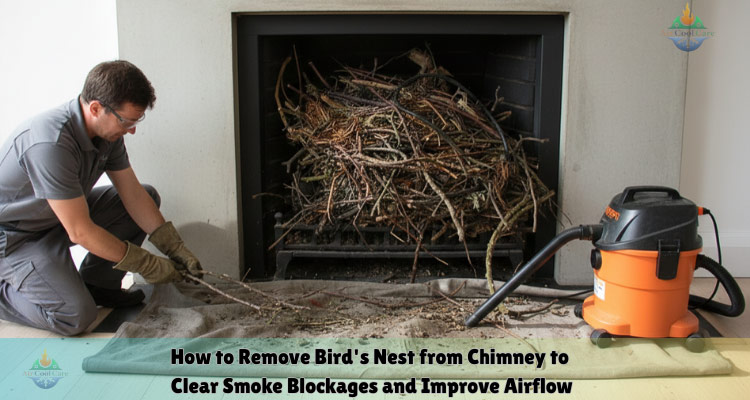
If you are certain the nest is abandoned and you have the right safety gear, here is the professional approach to clearing the blockage.
Step 1: Inspection and Safety Gear
Never look up a chimney without eye protection. Debris, soot, and bird mites can fall directly into your face. Wear a high-quality P2 dust mask to avoid inhaling soot or dried bird droppings (which can carry respiratory diseases).
Step 2: Locate the Blockage
Use a powerful torch to look up from the bottom. Sometimes nests are built right at the top (near the cowl), and other times they are wedged deep in the “smoke shelf.”
Step 3: Use Specialized Chimney Rods
Do not use a garden hose or a broom handle. Professional chimney rods are flexible and allow you to attach different “spirals” or “scrapers.”
- The Process: You typically work from the bottom up. By rotating the rods, you break apart the structure of the nest piece by piece.
Step 4: The Clean-Up and Vacuuming
As you break the nest, a massive amount of debris will fall. Ensure you have a drop cloth and an industrial-grade vacuum (like a HEPA-rated shop vac) to catch the dust and parasites.
Step 5: The Mirror Test
Once you think it’s clear, use a small mirror held at an angle in the hearth. On a sunny Perth day, you should be able to see daylight clearly at the top of the flue.
Why You Should Call Air Cool Care for Chimney Blockages
While some homeowners attempt the DIY route, knowing how to remove birds nest from chimney flues is a dirty, difficult, and potentially dangerous job. Here is why Air Cool Care is the preferred choice in Perth:
1. Specialized Camera Inspections
We don’t guess. We use high-definition “CCTV Chimney Cameras” to see exactly where the nest is and what condition your flue is in. This ensures we remove 100% of the blockage without damaging your masonry.
2. Comprehensive Sanitization
As we’ve mentioned, nests bring pests. After removing the physical nest, we use specialized antimicrobial and insecticidal treatments to ensure no bird mites or bacteria remain in your ventilation system.
3. Installing Preventive Measures (The Bird Guard)
The best way to “remove” a nest is to prevent it from ever being built. We supply and install high-quality, Australian-made stainless steel chimney cowls and bird guards. These allow smoke to escape perfectly while making it impossible for birds to enter.
How to Improve Airflow and Efficiency After Removal
Once the nest is gone, you should take steps to ensure your chimney or ventilation shaft is performing at its best:
- Professional Soot Removal: Even after the nest is gone, years of creosote (soot) buildup can restrict airflow. A full chimney sweep is highly recommended.
- Damper Inspection: Ensure your chimney damper opens and closes fully. A bird’s nest often jams these metal plates.
- Check for Structural Cracks: If a nest was ignored for a long time, the moisture it held might have caused some mortar to crumble. We can identify these issues before they become expensive repairs.
Frequently Asked Questions About Bird Nest Removal and Chimney Safety
1. Can I just burn the nest out?
Absolutely not. This is extremely dangerous. A nest fire can reach temperatures that will crack your chimney or set your roof on fire. Furthermore, the smoke blockage will push toxic fumes into your house.
2. What if the birds are still inside?
In Perth, you must wait until the chicks have left the nest. If it is an emergency (e.g., the bird is trapped), you should contact a local WA wildlife rescue group or a professional who has the permits to handle protected species.
3. How do I stop birds from coming back next year?
Installing a bird-proof chimney cowl or a heavy-duty mesh cap is the only permanent solution. Air Cool Care can install these during your cleaning service.
4. Are bird mites dangerous?
While bird mites don’t live on humans permanently, they will bite, causing intense itching and skin irritation. Professional sanitization after nest removal is the only way to ensure they are gone.
5. How long does a nest removal take?
Depending on the size and depth of the nest, a professional removal and clean usually take between 1.5 to 3 hours.
Conclusion
Your home should be a place of safety and comfort. A blocked chimney is a silent threat that compromises your air quality and fire safety. Understanding how to remove birds nest from chimney structures—and more importantly, how to prevent them—is a vital part of maintaining a Western Australian home.
Whether you are dealing with a current blockage or want to “bird-proof” your property before the winter rush, Air Cool Care is here to help. We bring the tools, the safety gear, and the local Perth expertise to ensure your chimney is clear, your air is fresh, and your family is safe.
Don’t wait for the first cold night of the year to find out you have a problem. Call the experts today and breathe easy!