
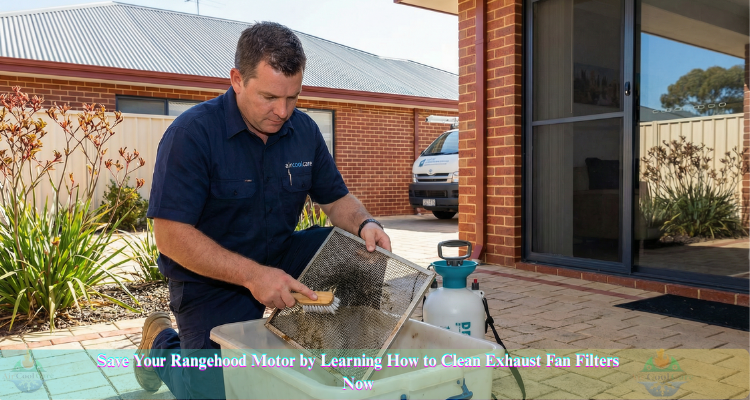
Keeping a kitchen fresh and grease free is a challenge for many Perth households. When you know how to clean exhaust fan filters properly you protect your home from lingering odours and fire hazards. A clogged filter is the main reason why your kitchen feels humid and smells like old cooking oil.
Most homeowners ignore their rangehood until the motor starts making a loud noise. By then the damage might already be done. Learning how to clean exhaust fan filters today will save you hundreds of dollars in appliance repairs and energy costs.
Why Kitchen Exhaust Fan Maintenance Is Critical for Your Home
A clean exhaust system is about more than just looks. It is about maintaining a healthy environment for your family and ensuring your kitchen appliances last for a decade.
Preventing Motor Burnout
When grease builds up it blocks the airflow completely. This forces the fan motor to work harder and run hotter.
If you don’t learn how to clean exhaust fan filters the motor will eventually burn out. Replacing a rangehood motor is often more expensive than buying a new unit.
Reducing Fire Hazards in the Kitchen
Sticky grease is highly flammable. If a pan catches fire on the stove the flames can quickly reach a greasy filter and spread through the ducting. Regular kitchen exhaust fan maintenance is your first line of defense against house fires.
Different Types of Exhaust Fan Filters You Should Know About
Not all filters are cleaned the same way. Understanding what material you are working with is the first step in how to clean exhaust fan filters safely.
1. Stainless Steel Baffle Filters
These are common in high end or commercial style rangehoods. They consist of multiple metal plates that trap grease. They are extremely durable and can handle heavy scrubbing and boiling water.
2. Aluminum Mesh Filters
Most standard Australian homes use these. They are lightweight and consist of several layers of fine aluminum mesh. While effective they are more delicate than stainless steel and require a gentler touch during cleaning.
3. Disposable Charcoal and Carbon Filters
If your rangehood recirculates air instead of ducting it outside you likely have these. You cannot wash these filters. Once they are clogged with grease and odour you must replace them to maintain indoor air quality.
Signs You Need to Clean Your Rangehood Filters Immediately
You don’t need to wait for a scheduled cleaning day. Your kitchen will give you clear signals when the grease buildup becomes too much to handle.
Poor Extraction and Lingering Smells
Does the smell of dinner stay in your house for two days? This is a classic sign of AC airflow problems in the kitchen. If the fan is on but the steam is still spreading across the ceiling your filters are likely blocked.
Visible Grease and Sticky Surfaces
If you can see yellow droplets hanging from the mesh it is already too late. This grease will eventually drip back onto your food or stovetop. Understanding how to clean exhaust fan filters will prevent this unhygienic mess.
Essential Tools for Removing Heavy Kitchen Grease
Cleaning grease doesn’t have to be a struggle if you have the right chemicals and tools. You probably already have most of these in your Perth home.
The Ultimate Cleaning Kit
- Degreasing dish soap or specialized kitchen cleaner
- Baking soda for breaking down old oils
- A large sink or a plastic tub that fits the filters
- Boiling water to melt the stubborn layers
- A non abrasive scrub brush to protect the mesh
Step by Step Guide on How to Clean Exhaust Fan Filters
Follow this simple process to get professional results without using harsh industrial chemicals. This is the core of our HVAC filter cleaning guide for kitchens.
1. Remove the Filters Carefully
Most rangehood filters have a simple metal tab or a sliding latch. Pull the tab and the filter should pop right out. Be careful as the frame might be slippery from the grease.
2. Prepare the Soaking Solution
Fill your sink with boiling water. Add a generous amount of degreasing soap and half a cup of baking soda. This combination creates a powerful reaction that dissolves grease almost instantly.
3. Let Them Soak
Submerge the filters completely in the hot water. Leave them for at least fifteen to twenty minutes. You will see the water turn cloudy as the grease starts to lift off the mesh.
4. Scrub the Remaining Residue
Use your brush to gently scrub any spots that are still sticky. Focus on the corners where the frame meets the mesh. Since you already soaked them the grease should come off with very little effort.
5. Rinse and Inspect
Rinse the filters under hot running water to remove all soap and loose debris. Hold them up to the light. If you can see through the mesh clearly your job is done.
6. Dry Thoroughly Before Reinstalling
Never put a wet filter back into an electrical appliance. Wipe the edges with a cloth and let them air dry on a rack. This ensures no moisture gets into the fan motor.
How to Clean the Fan Housing and Blades
Cleaning the filter is only half the battle. Grease often travels past the filter and settles on the fan blades and the interior housing of the rangehood.
Wiping Down the Interior
While your filters are soaking take a damp microfiber cloth with some degreaser and wipe the inside of the unit. Be careful to stay away from the electrical wiring and the light bulbs.
Cleaning the Exterior Stainless Steel
Use a specialized stainless steel cleaner to wipe the outside of your rangehood. Always wipe in the direction of the metal grain to prevent scratches. This keeps your kitchen looking professional and polished.
Troubleshooting Common Rangehood Issues in Perth Homes
Sometimes cleaning the filter doesn’t solve every problem. Here are a few other things to check if your kitchen ventilation is still poor.
Checking the External Vent
In some Perth houses birds or insects can build nests in the external vent cover. This creates a physical blockage that no amount of filter cleaning can fix. Check your outside wall or roof vent for any obstructions.
Inspecting the Ductwork
Flexible ducting can sometimes sag or become disconnected. If you hear the fan running but no air is moving there might be a break in the duct. This requires a professional inspection to restore proper suction.
Pro Tips for Increasing Air Conditioner Efficiency in the Kitchen
Many people don’t realize that a blocked kitchen fan affects the whole house. If your kitchen is hot and humid your main air conditioner has to work harder to cool the home.
By mastering how to clean exhaust fan filters you reduce the heat load on your central system. This is a simple trick to increase air conditioner efficiency and lower your overall Western Power bills during the summer months.
Common Questions About How to Clean Exhaust Fan Filters
1. Can I put metal rangehood filters in the dishwasher?
Yes most aluminum or stainless steel filters are dishwasher safe. However the high heat and harsh detergents can sometimes discolour the metal over time. Hand washing is always the safest bet for longevity.
2. How often should I perform kitchen exhaust fan maintenance?
If you cook with oil every day you should clean them once a month. For occasional cooks once every three months is usually enough to prevent motor damage.
3. What if my filters are made of paper or carbon?
Paper and carbon filters cannot be washed. If you have these types you must replace them with new ones every six months to maintain proper airflow.
4. Why is my fan still loud after cleaning the filters?
If the noise persists it could mean grease has reached the fan blades or the motor bearings are failing. In this case you might need a professional inspection from AirCoolCare.
5. Does baking soda really help with grease?
Yes baking soda is an alkaline substance that is excellent at breaking down acidic grease molecules. It makes the cleaning process much faster and safer for your hands.
6. Can I use vinegar to clean my exhaust filters?
Vinegar is great for many things but it is not as effective as baking soda for heavy grease. For best results stick to alkaline cleaners like soap and soda.
Conclusion
Mastering how to clean exhaust fan filters is a small task that yields big rewards. You get a cleaner kitchen a quieter fan and a motor that lasts for years. Don’t let hidden grease ruin your cooking experience or hike up your repair bills.
If you have cleaned your filters but your kitchen still feels stuffy there might be a blockage in the external ducting. For deep cleaning and professional vent maintenance the team at AirCoolCare is ready to help all Perth residents.