As the winter chill settles over Western Australia, thousands of Perth homeowners prepare to light their fireplaces and gas heaters for the first time in months. While the warmth of a hearth is a quintessential part of an Australian winter, it carries a hidden, odorless, and potentially deadly risk. If your chimney is not functioning perfectly, your home could be filling with Carbon Monoxide (CO).
Understanding carbon monoxide prevention is not just about appliance maintenance; it is about saving lives. Carbon Monoxide is often called the “Silent Killer” because you cannot see it, smell it, or taste it. In this comprehensive guide, we will explore the dangerous link between a blocked chimney and CO poisoning, and why every Perth resident needs to be vigilant about their home’s ventilation.
What is Carbon Monoxide and Why is it Dangerous?
Carbon Monoxide ($CO$) is a colorless, odorless gas produced when fuels such as wood, gas, coal, or oil do not burn completely (incomplete combustion).
1. The Biological Effect
When you inhale $CO$, it enters your bloodstream and attaches to the hemoglobin in your red blood cells. Normally, hemoglobin carries oxygen, but $CO$ binds to it 200 times more strongly than oxygen does. This effectively “starves” your brain and vital organs of oxygen, leading to suffocation from the inside out.
2. The Symptoms
In Perth, many CO poisoning cases go unnoticed initially because the symptoms mimic the common flu or a winter cold:
- Headaches and dizziness.
- Nausea and vomiting.
- Shortness of breath.
- Confusion or blurred vision.
- The Danger: If these symptoms disappear when you leave the house but return when you are inside with the fire on, you have a major problem.
The Fatal Link Between a Blocked Chimney and Carbon Monoxide Buildup
A chimney is designed to create a “draft” or “stack effect.” Because hot air rises, the toxic byproducts of combustion are naturally pulled up through the flue and exhausted outside. When this path is blocked, the physics of your home changes.
1. Backdrafting
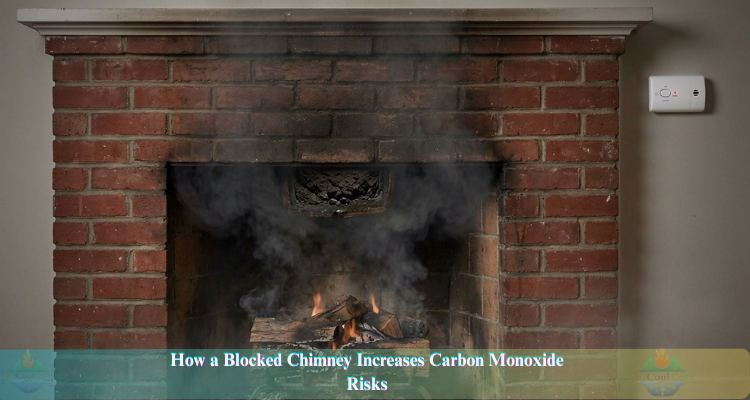
If a chimney is blocked by a bird’s nest (as we discussed in our previous guide), soot buildup, or fallen masonry, the toxic gases have nowhere to go. They hit the blockage and are pushed back down the chimney and into your living areas. This is known as “backdrafting.”
2. Lack of Fresh Oxygen
For a fire to burn cleanly and safely, it needs a constant supply of oxygen. A blocked or restricted chimney reduces the “pull” of fresh air into the firebox. This leads to poor combustion, which significantly increases the amount of $CO$ produced. A clean chimney promotes complete combustion; a blocked one guarantees $CO$ production.
The Perth Context and the Rise of Modern Airtight Homes
You might think that older heritage homes in suburbs like Guildford or Mt Lawley are the only ones at risk, but modern Perth homes are equally vulnerable.
1. Airtight Efficiency
Modern Australian building standards prioritize energy efficiency. We seal our windows and doors tightly to keep the heat in. However, if you run a powerful kitchen exhaust fan or a bathroom fan while your fireplace is going, you can create “negative pressure.” This can actually suck the $CO$ down the chimney and into your home—even if the blockage is only partial.
2. The “Summer Sleep”
Perth’s long, hot summers mean chimneys sit unused for 7 to 8 months. During this time, spiders, dust, and debris settle. Without a pre-winter inspection, you are lighting a fire in a system that has been dormant and potentially compromised by the harsh WA elements.
Critical Steps for Carbon Monoxide Prevention
If you want to protect your family, carbon monoxide prevention must be a multi-layered strategy. Here is what every Perth homeowner should do:
1. Install Audible CO Alarms
Just like smoke alarms, CO alarms are non-negotiable.
- Placement: Install them on every level of the home and specifically near sleeping areas.
- The Aussie Standard: Ensure they meet Australian Standard AS 4268.
- Maintenance: Test them monthly and replace the batteries every year during the Perth “switch to winter” period.
2. Annual Professional Chimney Sweeps
A garden hose or a simple brush is not enough. Creosote (a tar-like substance) builds up on the walls of the flue and can narrow the passage significantly. Professional chimney sweeps use specialized equipment to ensure the flue is clear of both soot and biological blockages like nests.
3. Proper Ventilation Habits
Never block your home’s “permanent vents.” Many older WA homes have wall vents designed to provide fresh air for heaters. Homeowners often cover these to stop drafts, unwittingly increasing their $CO$ risk.
4. Watch the Flame
If you have a gas fireplace, the flame should always be a crisp, steady blue. A lazy, flickering yellow or orange flame is a classic sign of incomplete combustion and high carbon monoxide production.
Warning Signs of a Blocked Chimney and CO Risk
Be a detective in your own home. Look for these “silent” indicators:
- Soot Staining: Check the walls above the fireplace or around the heater. If you see dark brown or black staining, smoke (and CO) is leaking back into the room.
- Lack of Updraft: If you hold a lit match near the fireplace opening and the flame doesn’t pull toward the chimney, your airflow is compromised.
- Dampness on Walls: $CO$ is often accompanied by water vapor. If your chimney breast feels unusually damp or you see “weeping” on the bricks, the exhaust gases are cooling and condensing because they can’t escape fast enough.
- Dead Birds in the Hearth: If you find dead birds or a lot of nesting material, do not light a fire until a professional inspection is done.
Why Choose Air Cool Care for CO Prevention in Perth?
At Air Cool Care, we don’t just care about cooling; we care about the safety of the air you breathe. When it comes to carbon monoxide prevention, our expertise in airflow is your best defense.
1. Advanced Flue Gas Analysis
We don’t just look at a chimney; we can test the air. Using digital CO detectors and flue gas analyzers, we can measure the exact output of your heating system to ensure it is running safely and efficiently.
2. Comprehensive Blockage Removal
As specialists in Perth’s unique housing environment, we know where the “hot spots” for blockages are. From removing stubborn bird nests to clearing heavy creosote, we restore the “stack effect” that keeps your home safe.
3. Integrated Home Ventilation Audit
We look at your home as a complete system. We check how your bathroom fans, kitchen exhausts, and fireplaces interact. Our goal is to ensure your Perth home has “balanced pressure,” eliminating the risk of backdrafting.
Frequently Asked Questions About Carbon Monoxide In Chimney
1. Can a smoke alarm detect Carbon Monoxide?
No. Smoke alarms and CO alarms are different. Smoke alarms detect particles; CO alarms detect a specific gas. You need both to be fully protected.
2. Is Carbon Monoxide only a problem with wood fires?
No. Gas heaters, charcoal grills, and even blocked dryer vents can all produce Carbon Monoxide. Any fuel-burning appliance is a potential source.
3. How often should a Perth chimney be inspected?
At least once a year, preferably in autumn (April/May) before you start using it regularly.
4. Can I smell Carbon Monoxide if it’s leaking?
No. However, you might smell the “smoke” or “soot” that often accompanies it. If you smell anything unusual when the heater is on, turn it off and open all windows immediately.
5. Why is my CO alarm going off when I cook?
If your kitchen ventilation is poor and you are using a gas cooktop, $CO$ levels can rise. This is a sign that you need to clean your rangehood or improve kitchen airflow.
Conclusion
A fireplace should be a source of joy and comfort, not a hidden danger. The link between a blocked chimney and carbon monoxide is undeniable and potentially fatal. In the beautiful suburbs of Perth, where we value our homes and our families, being proactive about ventilation is a responsibility we must all share.
By ensuring your chimney is clear, installing CO alarms, and trusting the experts at Air Cool Care for regular inspections, you are doing more than just maintaining a house—you are protecting lives. Don’t let the “Silent Killer” enter your home this winter. Take action today, clear the way for fresh air, and breathe easy knowing your home is safe. Stay warm and stay safe, Perth!